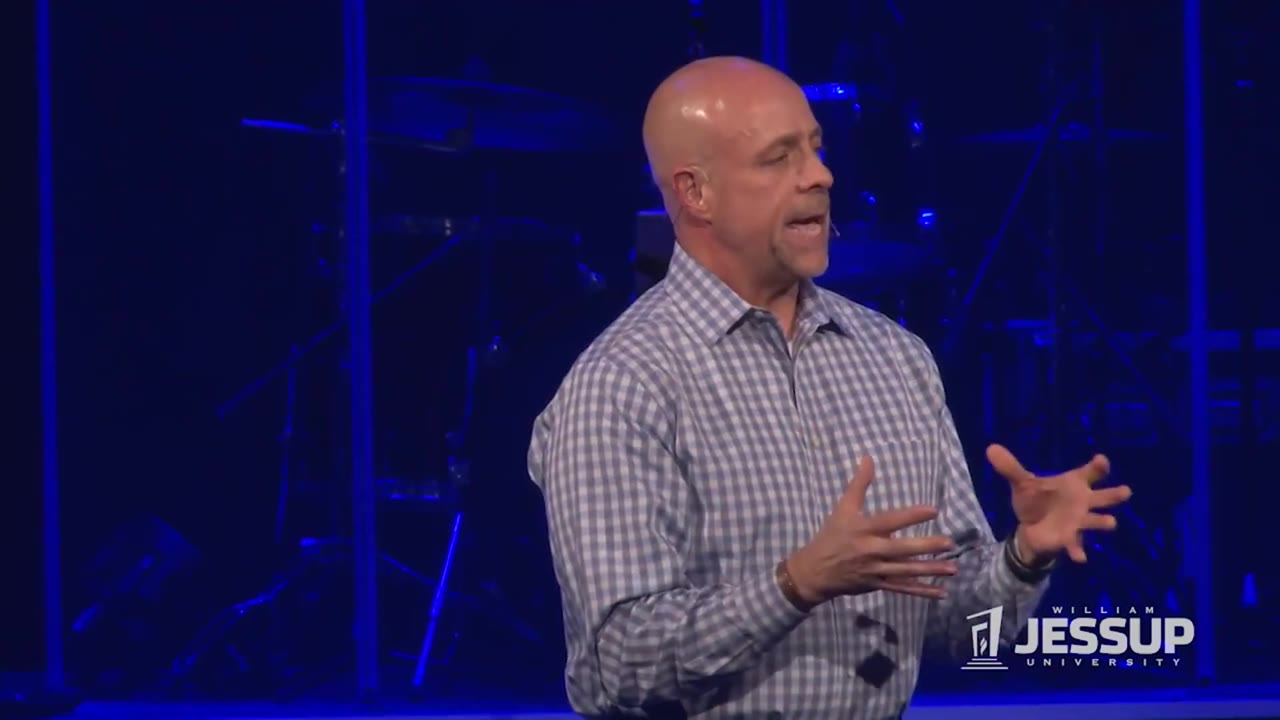
The structure, second by second
Timestamps are approximate and taken from the published reel.
| Time | Beat | Why it is there |
|---|---|---|
| 0:00 | A host: "Joining us this morning, David Woods Bartley," a keynote speaker "with an emphasis on mental health awareness" | Tells a planner the topic in the first sentence. Mental health buyers search by topic first. |
| 0:08 | Hosts: he has navigated "from mental health illness to the inclusive space of mental wellness" and has done over 800 presentations | Experience and range, delivered by other voices before David says a word. |
| 0:16 | Audience reaction: "Just a beam of light. Look at that face, smiling away" | Sets the emotional temperature. The audience sees warmth before it hears the story. |
| 0:24 | David: on August 31, 2011, he tried to take his life at the 730-foot Foresthill Bridge | The hardest fact, stated once and plainly, with no dramatization. Then the reel moves on. |
| 0:36 | "It was instead the first day of a new life. One person created connection" | The turn toward hope happens within seconds of the hardest line. |
| 0:44 | The first responder who sat beside him and asked, "What does it feel like to be depressed?" | A small, specific human moment. It shows the audience what connection actually sounds like. |
| 0:56 | Connection created hope, and hope got him to an emergency room and a psychiatric hospital | Models help-seeking as the path forward. |
| 1:08 | "I didn't fit the image" and "sometimes what hurts the most can't be seen" | The insight a workplace audience needs: the colleague who seems fine may not be. |
| 1:24 | A doctor tells him, "David, it's not your fault" | Removes stigma in one line. The reel lets it breathe before moving on. |
| 2:00 | To the audience: mental illness has "risen to epidemic levels," and everyone here is qualified to make a life-saving difference | Moves from his story to the room's responsibility. This is what a buyer is paying for. |
| 2:24 | The tool belt: "compassion and kindness and patience and understanding and love" | Practical, human tools anyone in the audience already has. |
| 2:44 | "I hate the term suicide prevention": life preservers and safety belts are named for what they affirm | His signature reframe. A distinct idea makes the keynote easy to describe internally. |
| 3:08 | "It's without hope that people will perish," then applause | Ends on hope, the message he wants the audience to carry out of the room. |
Why this structure fits a mental health keynote
The story is told once, plainly, and then the reel moves on
Planners who book mental health speakers (HR and wellbeing teams, benefits leaders, associations, schools and healthcare organizations) carry a real worry: will this talk be too heavy for my audience, or handled carelessly? The reel answers that by giving the hardest moment a single sentence at 0:24, in David's own words, and then turning to connection and hope within seconds. Most of the running time is about recovery, stigma and what the audience can do. That ratio is the point.
The audience gets a job, not just a story
From 2:00 the reel shifts from "what happened to me" to "what you can do for someone else." A buyer is not paying for a story; they are paying for what the audience does differently afterward. The tool belt line and the life preserver reframe give a planner something concrete to put in the program description.
Third-party voices carry the credentials
David never lists his own credentials. The hosts say "800 presentations," and an audience member describes him as "a beam of light." For a speaker on a vulnerable topic, that matters: the reel stays humble while still showing a planner he is experienced.
The length matches the subject
At 3:33 this reel is longer than Keith Ferrazzi's 2:10 reel. A mental health keynote needs time for the arc from crisis to hope to action to land without feeling rushed. Cutting it to 90 seconds would have left only the crisis, which is exactly the impression to avoid. See how long a speaker reel should be.
The editing choices
- Music drops under the story beats. The bridge and the hospital lines are carried by his voice, not a score.
- No re-enactment, no stock imagery of bridges. The reel stays on David and his audiences.
- The close is earned. The applause at the end follows the hope line, so the last emotion a planner feels is lift, not grief.
These choices follow the same rule we use on every reel: show the planner the experience their audience will have. More on that in what to include in a speaker reel and our page for mental health speakers.
What David said about the process
In his video testimonial, David says he had been speaking "for a while" and "didn't have a sizzle reel," and that he "was paralyzed" about who to hire. He also describes himself as "rather high maintenance" about changes, and says the team responded "always with professionalism, always with amazing patience." His reel went through the same revision process as every other: two rounds of revisions included.
If you or someone you know is struggling, in the US you can call or text 988 to reach the Suicide and Crisis Lifeline.
David's testimonial

“These are the guys. I promise you: not only will you not be disappointed, you are going to be thrilled.”
Questions people ask
How long is David Woods Bartley's speaker reel?
3 minutes 33 seconds. His video testimonial is a separate 1:05 clip.
How do you handle a suicide story in a speaker reel?
We let the speaker tell it in their own words, once and plainly, then give most of the running time to recovery, hope and what the audience can do. No dramatization, no re-enactment. The reel should show a planner the talk is safe and useful for their audience.
Was David's reel filmed specially?
No. It was edited from existing event footage, like every reel we have published. (Filming is available on a custom quote when a speaker needs new footage.) See speaker reel production.
What did David think of the result?
In his testimonial he says "the end product was incredible" and that he knows "it is going to open up doors that I didn't even know existed."
Keep reading
Speaker reels for
Mental health speakers
How a mental health keynote reel shows lived experience safely and gives the audience hope and something to do, with David Woods Bartley's reel as the example.
Speaker reels for
Motivational speakers
How a motivational keynote reel proves energy and substance at once, with Martinus Evans and David Woods Bartley as examples.
Case study
Courtney Clark
A 4:19 resilience reel that opens with a joke, places a serious health story in the middle, and proves the talk is interactive.
Guide
What to include
The eight structural beats behind effective keynote reels, with timestamped examples from real ones.
Guide
How planners judge reels
What meeting planners, bureaus and committees look for in a demo reel, and what makes them skeptical.
Service
Speaker reel production
What you get for $3,000 flat, how the edit works, and what we need from you.
Your next stage
Get a speaker reel that books the room.
One flat $3,000 per reel (50% to begin, 50% on completion). Edited from footage you already have, delivered in 2 to 3 weeks, with two rounds of revisions. Two minutes to see if you're a fit.