Watch the reels
Six reels that each use a different technique. The notes below cover all ten.




Ten reels at a glance
| Speaker | Topic | Length | The technique to borrow |
|---|---|---|---|
| Keith Ferrazzi | Leadership, teams | 2:10 | Two host introductions carry all the credentials |
| Nick Sonnenberg | Productivity, AI | 2:49 | A named problem (the "scavenger hunt") plus an unexpected personal story |
| Scott Zimmer | Generational communication | 2:56 | One funny, specific story carries the whole message |
| Kian Gohar | Innovation, future of work | 3:00 | Research credibility and a four-part framework |
| David Woods Bartley | Mental health | 3:33 | A survival story told with restraint, ending on hope |
| Martinus Evans | Resilience, running | 3:41 | Opens with audience energy; organizer praise mid-reel |
| Paula Houlihan | Wellness, culture | 3:52 | An attendee testimonial in the first ten seconds |
| Sam Silverstein | Accountability | 4:07 | No host: a contrarian argument from the first word |
| Courtney Clark | Resilience, change | 4:19 | Three attendee testimonials spaced through the reel |
| Mike Domitrz | Respect, workplace culture | 4:54 | Call and response that shows how interactive he is |
What each reel does well
Keith Ferrazzi: let others establish authority
Keith's reel is the shortest at 2:10 because it does not need to argue for his credibility. Two hosts handle it in 24 seconds: one calls him "one of the smartest people who coaches the top executive teams around the planet", the other lists his roles at Ferrazzi Greenlight. Then the reel moves straight to a contrarian line ("the way we think about leadership today is sometimes wrongheaded"), his named idea, teamship, and a client's testimonial. Borrow: if your name is known, spend your seconds on ideas, not proof. Full breakdown.
Nick Sonnenberg: name the problem, then surprise them
Nick's reel names a problem every office worker recognizes: tools used so inconsistently that work becomes "a scavenger hunt, where it takes longer to find what you're looking for than it does often times to just get the work done." Then it does something unexpected for a productivity speaker: it shows him earning a spot on Team USA for chess boxing. Borrow: one surprising personal detail makes a business speaker memorable. Full breakdown.
Scott Zimmer: one story does the work
Scott's reel is built around a single story: a boomer manager asks her Gen Z intern to text when the tablets arrive, gets "fire emoji, fire emoji", and pulls the car over because she thinks they are on fire. It explains his whole topic (generations miscommunicating) in one laugh. The reel then puts the audience to work: "Millennials, how do you think other generations describe you?" Borrow: if you have a story audiences retell, build the reel around it. Full breakdown.
Kian Gohar: research as credibility
Kian's reel opens with a promise ("I promise to make this talk very practical and relevant to everybody in the audience") and backs it with a research credential: a project with Harvard Business School interviewing "over 2,000 executives, entrepreneurs, change makers." The four behaviors of radical adaptability (collaboration, foresight, agility, resilience) give planners a clear agenda. Borrow: for corporate audiences, a research base and a named framework reduce perceived risk. Full breakdown.
David Woods Bartley: restraint with a hard story
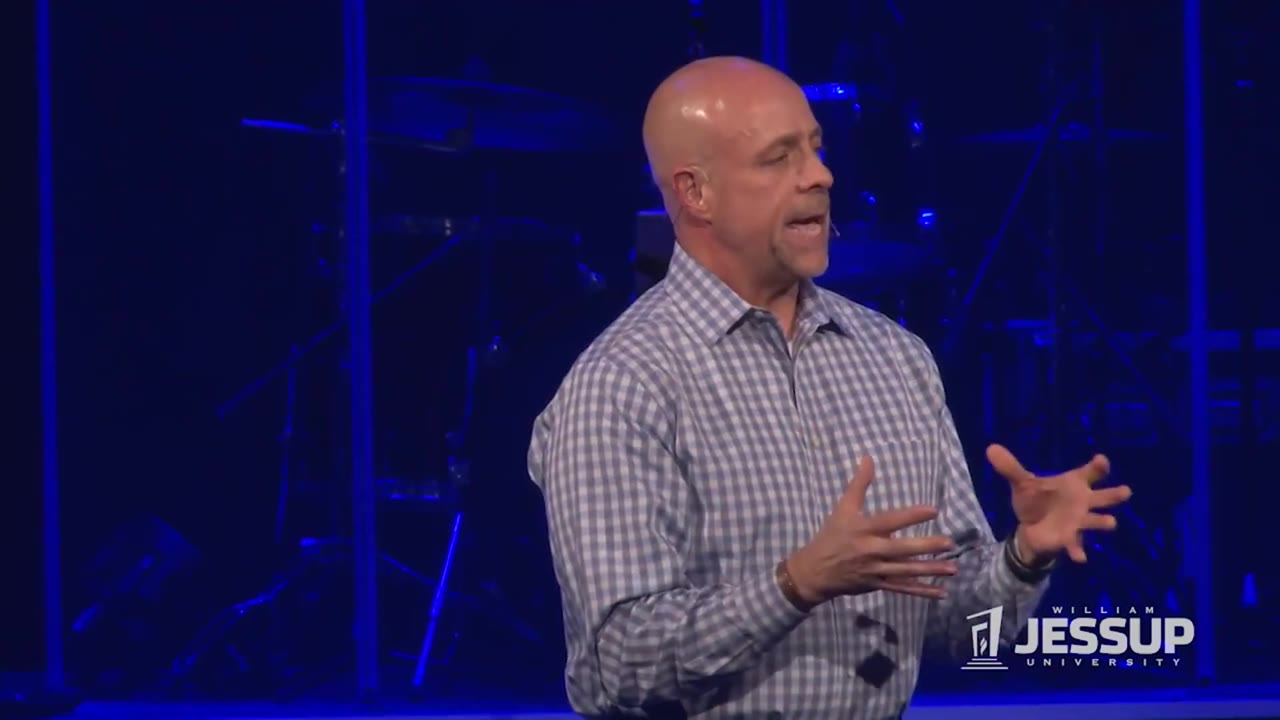
David's keynote is about surviving a suicide attempt. The reel lets hosts establish him first ("He has done over 800 presentations all around the world"), then tells the story plainly, focusing on the first responder who asked "What does it feel like to be depressed?" It closes on his reframe of "suicide prevention" and on hope. Borrow: with sensitive topics, show planners you handle the story with care, and end on what the audience takes away. Full breakdown.
Martinus Evans: energy as the product
Martinus's reel opens with a question to the crowd ("How often has someone ever tried to crush your dreams?") and cuts to a room making noise. Hosts list his credentials, then voices from the event say he "brought the hype" and "did such a great job telling his story." Borrow: if organizers book you for energy, the reel should feel like the room did. Full breakdown.
Paula Houlihan: testimonial first
Paula's reel puts an attendee on screen within seconds: "Oh my gosh, this woman is brilliant. Her process is so well thought out, so clear." Then come a statistic (93% of organizations worrying about employee turnover), her personal story ("My definition of success almost killed me") and her "choice management model." Borrow: a peer's reaction early buys you the planner's attention for the rest. Full breakdown.
Sam Silverstein: argument from the first word
No host, no montage. Sam's reel opens on "The real problem in our businesses today are not the people" and builds an argument from there, including a definition planners can repeat: "You're responsible for things. You're accountable to people." Borrow: if your talk is a strong idea, let the idea carry the reel. Full breakdown.
Courtney Clark: testimonials as rhythm
Courtney's reel uses a host introduction, a self-deprecating joke ("You know that amazing feeling when everything turns out exactly the way you planned? Yeah, me neither."), her idea of revisionary thinking, and three attendee comments spaced between sections. It also shows an interactive exercise where she asks the room to "pretend like your hands are gone" and keep going. Borrow: spacing short testimonials keeps a longer reel moving. Full breakdown.
Mike Domitrz: proof of interaction
Mike's reel is our longest at 4:54, and it earns it. Much of it shows him working the room: "If you've heard of workplace culture, say heard of it," with the audience answering back. It also tackles a planner's objection directly: "You cannot change people in 45 minutes." Borrow: if your style is interactive, show enough of it that a planner believes it. Full breakdown.
How to use these examples
Do not copy a reel; copy the reasoning. Ask what your buyer most needs to believe about you, then pick the technique that proves it. The beats are explained in what to include in a speaker reel, and the trade-offs on runtime in how long a speaker reel should be. For more reels by audience, browse speaker reels by topic.
Four more


Questions people ask
Where can I find good speaker reel examples?
Watch the reels on studio websites, speaker bureau profiles and YouTube. The ten on this page were all edited by Hop On Stages from speakers' existing footage, and each links to a timestamped breakdown. The Speaker Lab also publishes a roundup of demo video examples.
What makes a great keynote speaker reel?
A fast opening, a clear signature idea, and proof that real audiences respond: reactions, testimonials and host introductions. The best reels choose techniques based on what the buyer most needs to believe.
Were these reels filmed by Hop On Stages?
No. Every reel on this page was cut from footage the speaker already had, such as event recordings, livestreams and interviews. We can film or book a local crew when a speaker needs new footage, but that is a custom quote, and none of these reels needed it.
How much did these reels cost?
Hop On Stages charges $3,000 flat per reel, 50% to begin, 50% on completion, regardless of length. For industry-wide prices, see the speaker reel cost guide.
Sources
Keep reading
Hub
Our work
Watch speaker reels we made for Keith Ferrazzi, Kian Gohar, Nick Sonnenberg, Sam Silverstein and more, with a breakdown of how each one was structured.
Guide
What to include
The eight structural beats behind effective keynote reels, with timestamped examples from real ones.
Guide
Speaker reel length
Industry benchmarks, the real lengths of 10 published keynote reels, and when to go shorter or longer.
Hub
All topics
What a speaker reel needs to prove for leadership, resilience, mental health, culture, productivity and other keynote topics, with real examples.
Roundup
Best speaker reel companies
Ten speaker demo reel studios ranked on price, filming, turnaround and what happens after the reel.
Service
Speaker reel production
What you get for $3,000 flat, how the edit works, and what we need from you.
Your next stage
Get a speaker reel that books the room.
One flat $3,000 per reel (50% to begin, 50% on completion). Edited from footage you already have, delivered in 2 to 3 weeks, with two rounds of revisions. Two minutes to see if you're a fit.