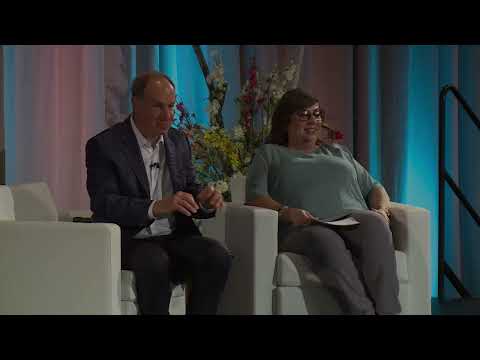
The structure, second by second
Timestamps are approximate and taken from the published reel.
| Time | Beat | Why it is there |
|---|---|---|
| 0:00 | "The real problem in our businesses today are not the people. The real problem is how leadership sees the people" | A cold open that challenges the buyer directly. Leaders lean in when they are told the problem might be them. |
| 0:08 | "Everything we've been taught about accountability is wrong" | A contrarian claim that makes the keynote distinct from generic leadership talks. |
| 0:16 | "Accountability is not a way of doing. Accountability is a way of thinking" | Reframes the topic in one line. |
| 0:28 | Organizations that say "my people need to be better" and skip "we as leaders need to be better" are the ones that struggle | Names the exact mistake his audience is likely making. |
| 0:40 | "There's an energy that happens in the room when people hear truth" | Sam describing the audience experience, which tells a planner what the session feels like. |
| 0:56 | "Accountability is keeping your commitments to people. That's it." Responsible for things, accountable to people | A definition a planner can paste into a program description. |
| 1:08 | High accountability brings better leadership, communication, teamwork, retention, engagement, productivity and profitability | The business case, in the language budget holders use. |
| 1:24 | "Culture is where accountability lives": leaders model, teach and protect the culture | Connects to culture, which widens who can book the talk. |
| 1:44 | Over 30 years working with organizations; it took 10 years to see accountability at the core | Experience and origin, kept short. |
| 2:00 | Relationships and values: "Lived values attract great people" | The human side, so the talk is not just about performance. |
| 2:32 | Accountability flows from the leader to the people and back; organizations that "generate significance" | The model in a single image. |
| 2:56 | "No more excuses": focus on what you can control | A call to action with some heat. |
| 3:12 | Audiences taking notes and asking "how do I get better?" | Proof the talk produces reflection, not just applause. |
| 3:56 | "Accountability is the highest form of leadership" | Ends on the thesis, restated as a line people will quote. |
Why this structure fits an accountability keynote
No host intro, because the idea is the credential
Most of our reels open with someone else's praise. Sam's opens with his own thesis, and that is intentional. Accountability is a crowded topic, and the buyer (often a CEO, a senior HR leader or an association education chair) has heard the generic version many times. The fastest way to stand out is to say something they disagree with in the first eight seconds, and then back it up.
A definition a buyer can reuse
"You're responsible for things. You're accountable to people." Lines like this matter more than they look. The person watching a reel usually has to explain the speaker to someone else: a CEO, a committee, a board. A clear definition gives them the words.
The business case comes early
At 1:08 the reel connects accountability to retention, engagement and profit. That is where an idea-led reel can lose a corporate buyer if it stays abstract too long. Putting the outcomes in the first 90 seconds keeps the budget holder watching.
Four minutes, because it is an argument
At 4:07, this reel is one of our longer ones. Compare it with Nick Sonnenberg's 2:49 reel: a concrete, familiar problem needs less setup than a reframe of how leaders think. If your talk asks the audience to change a belief, give the reel time to show you can make the case. See how long a speaker reel should be.
The editing choices
- Stage footage and direct-to-camera interview, intercut. The stage proves he can hold a room; the interview lets him explain the idea clearly without audience noise.
- No applause montage. Applause is not what an accountability buyer is purchasing. Note-taking and reflection are, so the reel shows those.
- The last line is the thesis. A planner finishes the reel with the exact phrase they would put on a flyer.
Who this reel is for
Buyers of leadership speakers and workplace culture speakers: leadership conferences, executive retreats, management training days and associations whose members run teams.
Questions people ask
How long is Sam Silverstein's speaker reel?
4 minutes 7 seconds.
Why doesn't Sam's reel have a host introduction?
Because his strongest asset is a provocative idea. Opening on the thesis ("The real problem in our businesses today are not the people") separates him from other accountability speakers faster than a host could.
Is a 4 minute speaker reel too long?
Not when the talk is an argument that needs building. Planners who are interested keep watching; the first 30 seconds just have to earn it. Our published reels run 2:10 to 4:54.
Keep reading
Speaker reels for
Leadership speakers
What corporate and association buyers need to see in a leadership keynote reel, with Ferrazzi, Gohar and Silverstein as examples.
Speaker reels for
Workplace culture speakers
How a workplace culture reel proves the audience will not feel lectured and will change daily behavior, with Domitrz, Houlihan and Silverstein as examples.
Speaker reels for
Authors
How an author-speaker's reel proves the keynote is worth booking beyond the book, with Ferrazzi, Sonnenberg, Gohar and Silverstein as examples.
Case study
Keith Ferrazzi
A 2:10 leadership reel that leads with a host's introduction and closes on Keith's signature idea, teamship.
Case study
Mike Domitrz
A 4:54 workplace culture reel that defuses audience resistance to respect and harassment topics with humor and a sharp reframe.
Guide
Speaker reel length
Industry benchmarks, the real lengths of 10 published keynote reels, and when to go shorter or longer.
Your next stage
Get a speaker reel that books the room.
One flat $3,000 per reel (50% to begin, 50% on completion). Edited from footage you already have, delivered in 2 to 3 weeks, with two rounds of revisions. Two minutes to see if you're a fit.